Showing posts with label ecology. Show all posts

Friday, October 31, 2025

Coastal Woodlands

Beaches, bays, and marshes come to mind most readily when I think about coastal environments.  But the Gulf Coast also boasts a variety of wooded landscapes that provide crucial habitat for many animals and serve as buffers against storms.  In the photo below, a Great Egret fishes along a wooded coastal creek in late December.  One consequence of the moist, warm regional climate is that many woodlands tend to stay green and blooming well into the fall and winter.

Great Egret (Ardea alba)

I love the diversity of these coastal forests.  The canopy trees may be hardwoods like black gum, water oak, or live oak; pine species; or a mixture of both.  Several of these trees, like the water oak, can be found across much of the southeastern U.S., while others, such as the southern live oak, are highly representative of coastal ecosystems.

Slash pine (Pinus elliottii) is a common, fire-resistant tree in coastal woodlands.  Note also its broad patches of bark.


Water oaks (Quercus nigra) typically have smaller leaves, but these saplings were growing in to the understory, and therefore needed more leaf surface area to capture sunlight.

This is a typically enormous live oak (Quercus virginiana).  These trees grow rapidly in the first few decades of life.

The understory trees and shrubs of coastal woods are particularly interesting, since they tend to bear obvious adaptations to the ever-changing environment.  For example, there are a number of species that are evergreen and have waxy leaves: features that help to prevent desiccation and protect against the fires that were once natural, expected occurrences on the coast.  In more recent decades, prescribed burning has aided in forest recovery.

Swamp bay and wax myrtle are two of these common evergreen coastal trees (or shrubs, depending on their growth pattern).  Both species produce provide cover for animals during the winter, and their flowers and fruits can attract many birds and other wildlife.  The wax myrtle’s leaves are smoother and have wavier margins than those of the swamp bay.

Swamp bay (Persea palustris)


Wax myrtle (Morella cerifera)

A little farther inland, mountain laurel is often a surprisingly common understory plant.  It usually grows in montane forests in the northerly portions of its range, but it may be found in low-lying areas in the coastal region.  Like the swamp bay and the wax myrtle, it has thick, waxy, evergreen leaves.  While birds and insects may enjoy feeding from its flowers, it is highly toxic to most other animals.
Mountain laurel (Kalmia latifolia)

Of course, not all understory plants of the Gulf Coast have a typical tree-like growth form.  The dramatically spiky, waving fronds of the saw palmetto give panache to the forest floor.  Like other palm species, saw palmettos stay green all year.  Their berries provide food for a multitude of wildlife species.

Saw palmetto (Serenoa repens)
 
What of the non-shrub understory plants of these coastal woods?  Well, switch cane is one of the most noticeable.  This is especially true during the winter, when many of the herbaceous—or non-woody—plants have died back, and only the toughest of them, the graminoids—a group that includes grasses and sedges—are left to provide groundcover.  Canes and bamboos actually belong to the grass family, which isn’t surprising when you consider their shape and growth habits.  Being a native bamboo, switch cane commonly grows in low-lying, swampy habitats.  In other words, don’t necessarily expect to find it in urban areas!  Of course, if it does happen to be growing there, leave it be.  Native plants deserve a chance to thrive.  

Switch cane (Arundinaria tecta)

As always, there are countless other plant species that you may find in these coastal woods.  The colder seasons along the coast don’t always look the way that you might expect, and there is generally a lot of greenery in the woods.  As the season eventually shifts into early spring, however, watch for changes—particularly the proliferation of herbaceous plants along the ground and the blossoming of some of the trees and shrubs in the other forest layers.  It’s always nice to have an excuse to duck into a comparatively cool, shady woodland after a long walk at the beach on a sunny day!

Thursday, July 31, 2025

The Red-cockaded Woodpecker

If you live in or near pine forest regions of the southeastern United States, you have a decent chance of encountering the Red-cockaded Woodpecker, a specialist of those habitats.  You will likely hear the raspy calls before actually seeing the woodpeckers, which tend to be relatively inconspicuous against the trunks of the pines.  When one of them comes into view, though, it can be distinguished from the far more common Downy and Hairy Woodpeckers by its white cheek patches and completely barred back.  (Downy and Hairy Woodpeckers, in contrast, have striped faces and white backs.)  Males of the species have red feathers—the “cockades”—on the sides of the crown, but, because these are tiny and seldom displayed, they are not a particularly important field mark.

Note the barred back and the white cheeks

These woodpeckers are restricted to open pine forests with sparse understories of palmettos, grasses, shrubs, and other plants.  The open nature of the habitat is a consequence of natural fires, which restrict understory growth and possibly leave younger trees more susceptible to Phellinus pini, or red heart, a fungal disease that damages the heartwood of infected pines.  The softened, diseased wood can then be more easily excavated by Red-cockaded Woodpeckers, which will dig cavities 5-50 feet high in living trees infected with red heart.  Many of these infected trees are well over 40 years in age.  The birds peck into the sapwood above and below the cavities that they create, which results in a flow of sap that deters predators (such as rat snakes) and other animals from accessing the roost or nest holes.

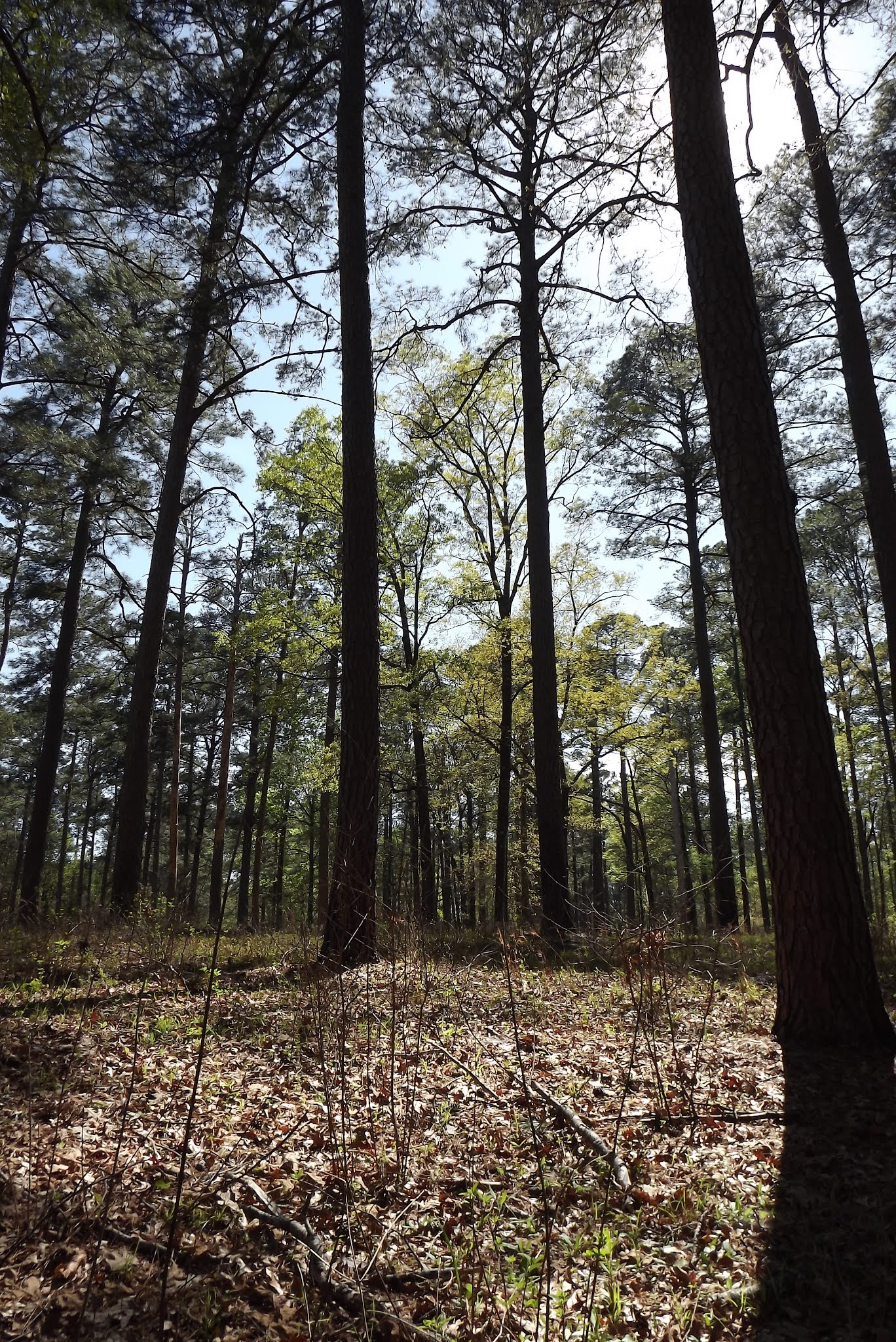
Open pine habitat in early spring

Like most woodpeckers, Red-cockaded woodpeckers make various vocalizations at the nest and during courtship and other encounters.  Drumming on trees—usually pines—is another common means of communication, as are wing-fluttering, open-winged displays, and crest-raising.  The spread-winged display is used to reinforce the pair bond between a male and female.  Eggs are laid from late April to early June in a pre-existing cavity, rather than one that is excavated specifically for a nest.  The eggs are white in color, and become stained with pine resin over the course of the incubation period.  The female of the pair lays one egg per day, with one to six eggs comprising a clutch.  Incubation, which lasts about ten days, is performed by both parents, with the male incubating overnight.  Both parents feed and tend the altricial, pink-skinned, featherless nestlings.  Although the young birds fledge after about 26-29 days, they are at least partially dependent on their parents for up to six months afterward.  The Red-cockaded Woodpecker’s propensity for living in loose colonies or family groups benefits it during the nesting period, as unmated “helper” birds may aid breeding pairs in feeding nestlings and fledglings.  Usually, a pair has only one brood per year.

A foraging Red-cockaded Woodpecker

Interestingly, male and female Red-cockaded Woodpeckers are somewhat segregated according to the types of feeding sites that they use, with males foraging on branches and high on the trunks of pines, and females preferring to forage at lower elevations and only on the trunks.  Both sexes eat mainly insects and other arthropods, including cerambycid beetles, larvae and grubs of various species, ants, and millipedes.  On occasion, they will also consume small fruits and seeds. 

Although the Red-cockaded Woodpecker is a fairly widespread species, it is patchily distributed due to its highly specialized niche.  Habitat loss remains a serious threat to these woodpeckers, so conservation efforts generally focus on preserving tracts of large pines and subjecting them to controlled burning to clear the understory layers.  These measures seem to be working.  Just last year, the U.S. Fish and Wildlife Service downlisted the species from endangered to threatened.  Any birder or naturalist who is fortunate enough to live near one of the managed populations would do well to keep a sharp eye—and ear—out for these fascinating little woodpeckers during this summer and fall.


Sources:

Ligon, J. D.  1970.  Behavior and breeding biology of the Red-cockaded Woodpecker.  Auk        87(2):255-278.

https://www.fws.gov/press-release/2024-10/downlisting-red-cockaded-woodpecker-endangered-threatened

Monday, June 30, 2025

Observing Gallinules

My first sighting of a gallinule was over twenty years ago at Noxubee National Wildlife Refuge.  It was a Purple Gallinule, and utterly unmistakable: violet head, neck, and breast blending to green on the back and wings; long, yellow legs; red-and-yellow bill; ruffled white undertail feathers; and a chicken-like gait and stance.  I later saw Common Gallinules (then called Common Moorhens—they were split from the Old World species in 2011), as well.  I had heard them calling at a heronry in south-central Mississippi before that, but had not seen them.  As it turns out, even though gallinules may be less secretive than their cousins, the rails, they don’t always make themselves obvious.

Perfect gallinule habitat -- and a gallinule in the upper right corner.

However, this time of year—late summer—is one of the best times to look for them.  Both Common and Purple Gallinules can be found on many ponds and lakes in the southeastern United States.  They need lots of aquatic vegetation on which to build their nests and search for food.  In the summer months, they are surprisingly active and vocal, and often have chicks in tow.  

This Common Gallinule swims with its three young.

This Purple Gallinule stays with its chick.

Gallinule clutch sizes are fairly large; eight is a typical number of eggs, although, obviously, not all of the chicks will survive to adulthood.  In the video below, you can see three Common Gallinule young swimming with the adult.

Gallinules consume a variety of foods, including aquatic vegetation and invertebrates.  Their long toes enable them to walk on floating vegetation (generally lily and lotus pads) while foraging.  They sometimes pluck insects and snails from the undersides of leaves, as you can see in the following video of a Purple Gallinule chick:

Because their nesting period is generally in the spring, their young are pretty far along in development by this point.  It also helps that they are born semi-precocial, rather than altricial.  This means that, unlike songbird chicks, they are feathered and have their eyes open.  Unlike precocial Killdeer chicks, though, they still stay in the nest for a day or so and must be fed by their parents for several days.  Once out of the nest, they can climb through vegetation using the tiny claws on their wings.  This is a feature of birds in Rallidae, the rail family.

This Purple Gallinule chick is stretching its wings.

It takes several weeks for gallinule chicks to learn to fly, and it could be argued that they are never truly comfortable with that skill!  On lakes and ponds, gallinules generally fly for only short distances, but some North American populations do migrate from breeding territories to wintering grounds in southern North America or Central America.  The vast majority of Common and Purple Galinules actually occur in South America, where they are permanent residents.

An immature Purple Gallinule -- old enough to be away from its parents, but not old enough for adult plumage.  Note the white undertail coverts, though.  Adult birds have these, too.

Some of my favorite places to see gallinules are Noxubee NWR and Ross Barnett Reservoir.  Of course, there are many other areas to look, and, if you go exploring, you just might discover a new hotspot. 


Sources:

Bannor, B. K. and E. Kiviat (2020). Common Gallinule (Gallinula galeata), version 1.0. In Birds of the World (A. F. Poole and F. B. Gill, Editors). Cornell Lab of Ornithology, Ithaca, NY, USA. https://doi.org/10.2173/bow.comgal1.01.

West, R. L. and G. K. Hess (2020). Purple Gallinule (Porphyrio martinica), version 1.0. In Birds of the World (A. F. Poole and F. B. Gill, Editors). Cornell Lab of Ornithology, Ithaca, NY, USA. https://doi.org/10.2173/bow.purgal2.01.


Saturday, November 30, 2024

Invasive Trees, Shrubs, and Vines

This is a consolidation of two of my earlier posts about invasive plants in the southeastern United States.  Invasives are simply nonnative species that cause significant harm to ecosystems.  Not all nonnative plants are invasive, but the invasives are very likely to be the ones that you notice on a daily basis!  Because the list of exotic plant species present in Mississippi alone (from this site: https://www.se-eppc.org/mississippi/) is lengthy and still increasing, I thought it made sense to focus on the invasive trees, shrubs, and vines that I commonly see in my part of the state.

Let’s start with trees.  A couple of quick definitions: although there are some exceptions, the general rule is that trees have a single woody stem or trunk, while shrubs have multiple woody stems/trunks.  Most of the trees that I regularly observe are native to my area, but, every so often, I will come across an invasive species or two—especially near urban settings.  Some commonly-seen cultivated plants, such as the ginkgo (an ancient, living fossil species that was wiped out across much of its range during the Pleistocene Ice Age) are basically innocuous, but others, such as the Bradford pear, can cause extensive damage to native ecosystems.  The Bradford pear is actually a cultivar of the species Pyrus calleryana, the Callery pear, which the United States Department of Agriculture introduced from Asia to the United States in 1916 to combat blight in the common pear, Pyrus communis.  (Obviously, common pears, along with other species that are used for food, largely benefit humans, so no one is suggesting that they should not be grown.)  Bradford pears are incapable of reproducing with other Bradford pears, but (as any fan of Jurassic Park would likely guess) this doesn’t stop them from proliferating; they just do it by cross pollinating with other calleryana cultivars, spreading this invasive species far and wide.  

One of several Callery/Bradford pears in the neighborhood.  Actually, this looks like it might be a "colony" instead of just one tree.

Chinese tallowtree, or popcorntree, is another common invasive.  Introduced to the U.S. in the 1700s, it is known for the waxy compounds found in its seeds, which have been used for candle- and soap-making.  Because the plants are toxic, few animals will eat them, so there is next to no biological control of their populations.  The USDA states that eradication is “virtually impossible,“ that the trees may begin reproducing at the age of only three years, and that they can continue breeding for 100 years– all of which make this species a particularly bad choice for North American naturescaping.  Don't grow it here!

The tallowtree tends to have a nice shape, which explains why it's so frequently planted.

Tallowtrees have heart-shaped leaves.  The seeds, which aren't in this summer photo, resemble popcorn.

In one sense, shrubs may be the stumpy cousins of trees, but their lushness more than compensates for that.  Along with tree saplings, shrubs comprise the understory layers in forest ecosystems.  However, invasive species, such as privet, don't always need to grow within wooded areas; they frequently thrive wherever their seeds have been dropped.  While several introduced privet species range across North America, the most common in the mid-southeastern region is Chinese privet.  There seems to be some conflicting information regarding when, exactly, Chinese privet was introduced to the United States—some sources say 1852, while others, including the previous link, say 1952.  The latter date might have been a typo, since the 1852 date shows up in sources such as the websites for the USDA, the University of Florida’s Center for Aquatic and Invasive Plants, and the Texas Invasive Species Institute.   

Chinese privet in the summer.

Privet leaves and unripe fruits.

At any rate, Chinese privet has become well established outside of its native range—so much that United States and regional noxious plant legislation isn’t even concerned with it and other privet species.  Eradicating privet from the U.S. is basically a lost cause.  Its fruits are eagerly consumed and widely spread by birds and other animals; it possesses tough, hardy, evergreen foliage; it forms extremely dense thickets; and, if cut, it regenerates quickly from its extensive underground root systems.  Several privet hedges in the neighborhood where I live have been cut before, but that didn't stop them from coming back with a vengeance.
  
A mockingbird and privet, photographed in Arkansas in 2013.  Birds are attracted to privet berries.

I have written about two bird nests—White-eyed Vireo and Northern Cardinal—that I observed in a thorny olive (or thorny elaeagnus) near the house.  The upper branches of thorny olives grow long and snake-like for the purpose of clinging to whatever is directly above them.  While this species—introduced in 1830 from Asia—lags behind privet in terms of invasiveness, it’s still a problem in many areas, forming spiky, impenetrable barriers.  There are a number of methods used to control thorny olives, but most of them are not particularly effective.  Essentially, even though the thorny olive does provide a certain amount of seclusion and protection for birds during the nesting season, there are much better options that don’t choke out all other vegetation in the ecosystem!

Long "tendrils" on the thorny olive.

The undersides of the thorny olive's leaves have silvery scales and sparse, tiny brown spots.

Another invasive shrub that can dramatically transform its environment is the multiflora rose (Rosa multiflora), a sometimes vinelike plant that was introduced from Asia to the U.S. in the 1860s.  Like kudzu, it was widely used for erosion control, and it also shares the ability to form impenetrable thickets.  Its thorny stems can attain heights of 10 to 15 feet, and it has attractive flowers that have five white petals with blunt or slightly indented tips.  Herbicides are effective at controlling multiflora rose, but follow-up treatments must be consistently applied to prevent germination of seeds, which can lie dormant, ready to sprout at any time, for up to 20 years in the soil.  

Multiflora rose flowers

We've looked at trees and shrubs, but what about vines?  One of the most out-of-control vines in the southeastern U.S. is so abundant that it has even had festivals created around it.  Kudzu (Pueraria montana) is a leafy, purple-flowered vine in the legume family.  Although it was originally imported to the U.S. (from Japan in 1876) as an ornamental, and was used for erosion control in the early 20th century, it has since become a noxious weed, infamous for covering entire landscapes and choking out native vegetation.  In ideal circumstances, it can grow up to a foot a day.  Controlling kudzu is difficult partly because of the stolons (or runners) that it produces, as well as rhizomes, or underground stems that produce roots and shoots; uprooting the plant so that it's incapable of forming new growth is next to impossible.  Herbicides can work if there is enough product to treat the many acres of ground that kudzu frequently smothers.

Kudzu creates odd, alien-looking landscapes.

Interestingly, one of the natural predators, the kudzu bug, was accidentally introduced into the U.S., with the first individuals recorded in Georgia in 2009.  However, because the kudzu bug tends to cause more damage to soybean crops than it does to kudzu, it can't be relied on as a biological control method.

Joining kudzu on the list of invasive vine species are two of the most widespread introduced legumes: Chinese and Japanese wisteria (Wisteria sinensis and W. floribunda, respectively).  Because these species can and do hybridize in the wild (rather like the red and black imported fire ant species), identification is often difficult.  Both species have long, compound leaves and clusters of purple or white flowers.  Given the toxicity of wisteria's fruits, native wildlife species are almost certainly not helping these plants to spread.  Instead, wisteria's quick growth and tendency to strangle and shade out native vegetation provide the explanation for its range expansion after its introduction to the U.S. in the early 19th century (1816 for Chinese wisteria, and about 1830 for the Japanese wisteria).  According to the Mississippi State University Extension Service, wisteria control is extremely difficult.

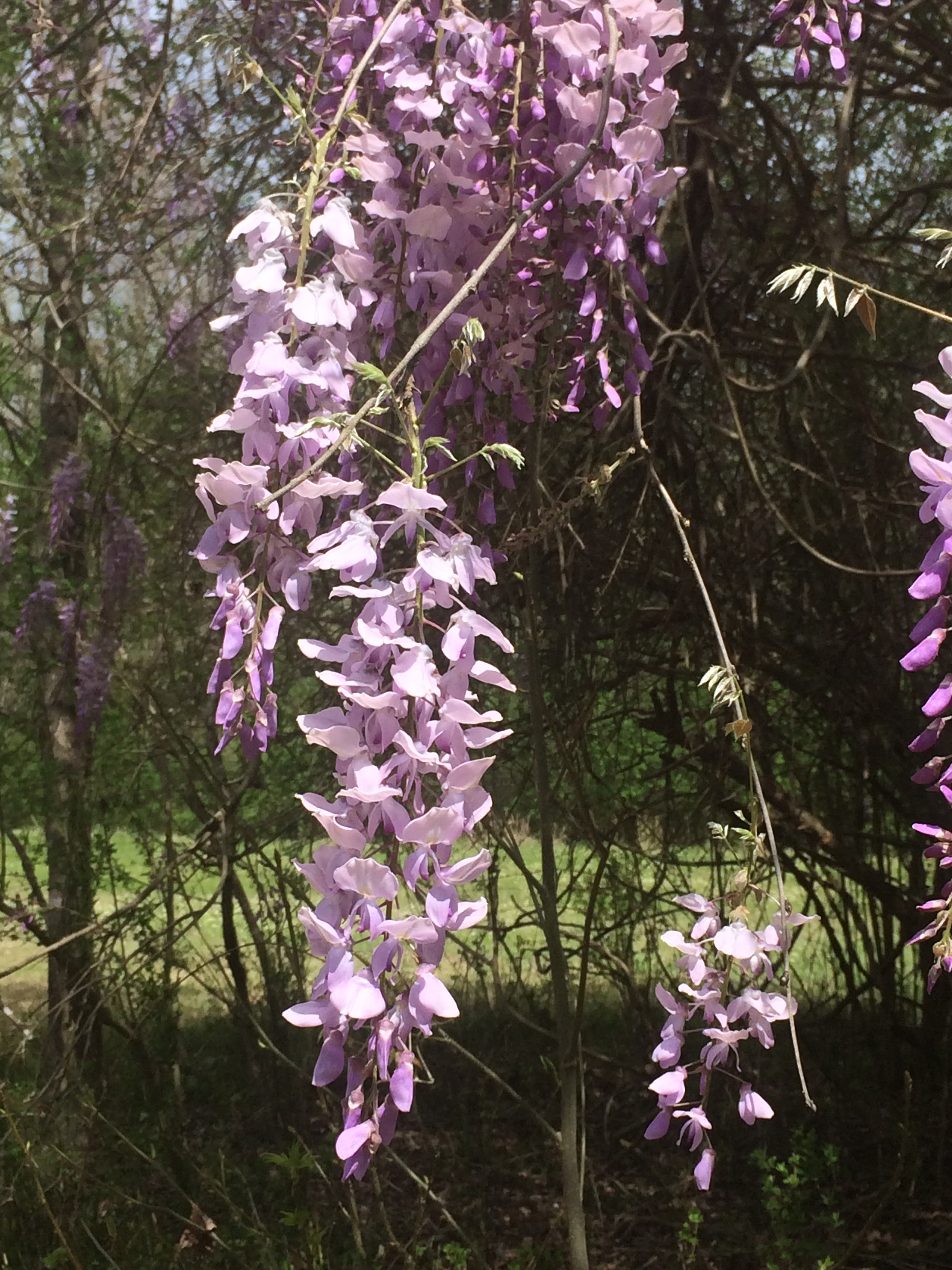
Wisteria flowers

Wisteria growing over another invasive: privet.

Another fairly horrifying invasive climbing plant is Japanese honeysuckle (Lonicera japonica).  Like all of the plants discussed thus far, Japanese honeysuckle was imported (in 1806) as an ornamental.  It has attractive and fragrant blossoms, and many people have fond childhood memories of sucking the nectar from these blooms.  Like wisteria, however, Japanese honeysuckle's thick, woody stems quickly strangle native vegetation—and, as with kudzu, biological control doesn't work.  In fact, there is no available biological control for Japanese honeysuckle.

Japanese honeysuckle flowers

Because of the limited ecological benefits and the difficulty of controlling Japanese honeysuckle, the Mississippi Forestry Commission recommends planting several native vines, instead—including crossvine, coral honeysuckle, and Virginia creeper.  That site and others, such as the Mississippi State University Extension Service, are well worth perusing for detailed information about native trees, shrubs, vines, and herbaceous plants.

In general, all of the introduced trees, shrubs, and vines described in this post flourish in their new environments due, in part, to a lack of herbivory by insects.  Native insect species didn't evolve with these plants, so they generally lack the ability to effectively utilize them.  Many studies have shown that insect communities tend to decline in the presence of nonnative plants.  A paper written by Berghardt et al. (2010) and published in the scientific journal Ecosphere (https://esajournals.onlinelibrary.wiley.com/doi/pdf/10.1890/ES10-00032.1) describes how Lepidopteran (that is, butterfly and moth) communities showed both lower population sizes and less species diversity on nonnative plants than on native ones.  Given the fact that many songbird species rely on caterpillars as a food source for their nestlings, the results of this study should definitely ring some alarm bells.  Fewer caterpillars mean less leaf damage, but also impoverished ecosystems.

Monday, September 30, 2024

Oak Masting

Do you see many oak trees in your area?  Did you know that there are two main types (or sections, in botanical terminology) of oaks in eastern North America?  While oaks are extremely variable, hybridize often, and can be quite difficult to identify to species, figuring out which section they belong to is relatively easy.  If they are white oaks, then they will have smooth margins on the lobes of their leaves, rounded lobes, and acorns near the ends of their branches.  Red oaks, on the other hand, will usually have a bristle at the end of each leaf lobe (which will probably be pointed instead of rounded, but there are several exceptions), and their mature acorns will be farther down on the twigs.  The reason for the difference in acorn position is that white oak acorns mature in a single season, while red oak acorns take two full seasons to mature.  Therefore, red oak branches will display additional growth past the acorns.  This feature is very noticeable once you start looking for it.

Acorns are at the tips of branches in white oaks (left) and at the earlier growth level in red oaks (right).

Oaks are perhaps the most familiar trees that produce large crops of seeds on a synchronous, highly variable basis, although they’re far from the only ones.  The mass production of seeds across an entire population of plants is referred to as masting.  Most oak species have these masting events every two to six years, and these mast production years can have significant long-term impacts on forest ecosystems.  In general, high acorn production has a positive effect on rodent and deer populations and a neutral to negative effect on nesting songbirds. 

One of the most famous studies to demonstrate the link between oak masting and rodent populations was conducted by Jerry Wolff in the Allegheny Mountains of southwestern Virginia.  Wolff (1996) surveyed populations of mice and eastern chipmunks by live-trapping and ear-tagging the animals, and recording data on their sex, age, mass, and reproductive condition.  Wolff’s data showed that populations of these rodent species peaked in the summers of 1981, 1986, 1989, and 1990, while an index of oak mast data for the area showed that the highest production occurred during 1980, 1985, 1988, and 1989.  What this indicates is that, while the rodents were enjoying an abundant food source during the high mast years, they were increasing both their chances of survival during the winter and their rate of reproduction during the following summer.  High mast years weren’t bad for the oaks, either: because there were more acorns than could be consumed by the rodents, more seeds than usual were able to germinate.

Mice, chipmunks, and squirrels will sometimes prey on eggs and young in birds’ nests, so, as might be expected, larger rodent populations can negatively affect bird species that nest either in low shrubs or on the ground.  One study in a forest near Front Royal, Virginia, showed that nest predation by rodents increased significantly following high mast years, and that Breeding Bird Survey indices for both Hooded and Worm-eating Warblers correlated negatively with high mast production years (McShea 2000).  However, it’s important to note that not all ground-nesting bird species will necessarily be affected.  For example, Ovenbird populations in Hudson Valley, New York, remained the same after increases in rodent numbers (Schmidt and Ostfeld 2003).  Schmidt and Ostfeld also found that Sharp-shinned and Cooper’s Hawks, which can feed on small mammals as well as on birds, became more abundant after high mast years—not surprising when you consider the rodent population boom that often follows a mast event! 

The links between deer populations, oak mast, and bird nest predation are a little more complicated.  Deer are more likely to produce twins after a high mast crop in the fall (Ostfeld et al. 1996), so it seems clear that acorn mast has a positive effect on deer populations.  Deer are heavy browsers of forest plants, though, and the previously mentioned study by McShea (2000) found that deer significantly reduced the understory vegetation within the forest community when their numbers were high, and that populations of white-footed mice and eastern chipmunks increased when deer populations were excluded from study plots.  McShea did not observe significant impacts on bird nesting success due to the presence of deer, but he did note that research by Leimgruber et al. (1994) discovered that, when vegetation density was high, nest predation rates tended to be low.  Therefore, even though numbers of nest-raiding rodents tend to increase when there are fewer deer in a forest, ground-nesting birds still benefit from the higher density of vegetation.

If deer populations increase after mast years, how does that affect the spread of Lyme disease?  Lyme disease is caused by a bacterium, Borrelia burgdorferi, which is mainly transmitted by the black-legged tick (Ixodes scapularis), a common parasite of deer and mice.  Ostfeld et al. (1996) noted that larval tick populations were around 10 times higher in oak forests than in other habitats after a mast year.  Additionally, deer avoided oak-dominated habitats during poor mast years, preferring instead to use forests dominated by maples and other tree species.  When the deer did this, larval tick populations also increased in those habitats. 

Yet another study (Ostfeld et al. 2001) monitored black-legged ticks, white-footed mice, and acorn production during the growing season in southeastern New York, and found that the number of B. burgdorferi-infected ticks was higher in the two years following a high mast year.  Not surprisingly, this population increase was also correlated with increases in mouse populations.  In case you’re wondering, ticks can be collected for research by dragging white cloths through study plots.  As anyone who has walked through forest undergrowth during the summer months knows, it really doesn’t take much effort to find and collect ticks!

As we’ve seen, oak mast directly and indirectly affects populations of other organisms.  But these relationships are far from one-sided; it’s important to understand that animal behavior in turn influences oak evolution.  For example, research by Steele et al. (2001) demonstrated that small mammals can strongly influence the growth and dispersal of oaks.  In that study, gray squirrels were found to prefer the acorns of white oaks to those of red oaks, because white oak acorns lasted longer in winter caches.  Also, squirrels performed embryo excision—that is, the killing of an acorn embryo by notching a seed at its apex—on their cached white oak seeds far more frequently than on red oak seeds.  This is probably because white oak acorns germinate earlier and more rapidly than those of red oaks, and squirrels can’t risk losing their cached food supply.  Of course, white oaks’ rapid germination also ensures that reproduction takes place despite some loss to squirrel caching.  It’s basically an evolutionary tug-of-war. 

Identification tip: white oak acorns (left) tend to have much deeper caps than red oak acorns (right).
On an even broader ecological scale, Blue Jays play an important role in the dispersal of oak species across eastern North America, and have helped to determine the present-day distribution of oak species across the continent.  Paleontological evidence suggests that, between around 126,000 and 11,700 years ago, Blue Jays dispersed oaks northward beyond what had been their usual range at the time (Johnson and Webb 1989).  Blue Jays can transport acorns hundreds of meters away from the source tree, and, for every acorn that they consume, they disperse about three.  Because climate change could potentially impart major changes to oak distributions in North America, dispersal of oaks by Blue Jays ultimately may help to compensate for areas that are unsuitable for oaks’ continued survival.  Hopefully, though, we won’t have to find out if that’s the case.

To sum up: Oak mast production and the presence of oaks in forest communities have many significant relationships with other species within the community, and are an essential part of the community food web.  Take a look around your area and see what sorts of oak-related ecological interactions are occurring!

References

Johnson W. C., & Webb, T. III. 1989. The role of blue jays (Cyanocitta cristata L.) in the postglacial dispersal of fagaceous trees in eastern North America. J. Biogeogr. 16:561-571.

McShea W. J. 2000. The influence of acorn crops on annual variation in rodent and bird populations. Ecology 81(1):228-238.

Ostfeld R. S., Jones C. G., Wolff J. O. 1996. Of mice and mast: ecological connections in eastern deciduous forests. BioScience 6(5):323-330.

Ostfeld R. S., Schauber E. M., Canham C. D., Keesing F., Jones C. G., Wolff J. O. 2001. Effects of acorn production and mouse abundance on abundance and Borrelia burgdorferi infection prevalence of nymphal Ixodes scapularis ticks. Vector Borne. Zoonotic. Dis.       1(1):55-63.

Schmidt K. A., & Ostfeld R. S. 2003. Songbird populations in fluctuating environments: predator responses to pulsed resources. Ecology 84(2):406-415.

Steele M. A., Turner G., Smallwood P. D., Wolff J. O., Radillo J. 2001. Cache management by small mammals: experimental evidence for the significance of acorn-embryo excision.    J. Mammal. 82(1):35-42.

Wolff J. O. 1996. Population fluctuations of mast-eating rodents are correlated with production of acorns. J. Mammal. 77(3):850-856.

Friday, May 31, 2024

Finding Summer Treefrogs and Cricket Frogs

Mississippi is home to quite a few taxonomic families of frogs and toads, including Ranidae, or the true frogs (such as bullfrogs and leopard frogs), individuals of which are largely aquatic and can be found in ponds, lakes, and streams; Bufonidae, or the true toads; Microhylidae, or the narrow-mouthed toads; Pelobatidae, or the spadefoot toads; and Hylidae, or the treefrogs, a group that encompasses the chorus frogs (including the spring peeper and the upland and Cajun chorus frogs), as well as many other species that can be heard calling right now.  Let’s take a look at some of these hylids.

Treefrogs are distinguished by the sticky pads at the ends of their toes, which enable them to climb.  They are typically found in trees and shrubs near sources of water.  In the southeastern U.S., one of the most common species is the American green treefrog (Hyla cinerea).  As its name suggests, this frog is typically bright green.  However, like other treefrogs, it is capable of changing color to adapt to changes in temperature and environmental surroundings.  It usually, but not always, has pale stripes running along its sides, and its skin is very smooth.  The call is a nasally quank that carries for a good distance.  Large choruses of this frog can be heard in almost any wet, wooded area.

Another common species is the squirrel treefrog (Hyla squirella), a small frog with a raspy call that is reminiscent of a squirrel’s barking sound.  This extremely variable species may appear almost any color from bright green to dusky brown, depending on environmental conditions.  At first glance, a bright green specimen of the squirrel treefrog might be mistaken for a green treefrog.  However, the squirrel treefrog is smaller and always lacks the pale lateral stripes of the green treefrog.  Squirrel treefrogs were formerly restricted to the southern half of Mississippi, but have recently expanded their range northward. 

The next three species to be discussed, the common gray, Cope’s gray, and bird-voiced treefrogs, can be visually separated from the green and squirrel treefrogs by virtue of their bumpy skin.  Like all treefrogs, they are more likely to be heard than seen, so it is still a good idea to learn to recognize them by their calls.

As their name suggests, gray treefrogs are frequently mottled gray in color, although they may also be various shades of green or brown—again, depending on temperature and habitat.  The two species of gray treefrogs, common gray (Hyla versicolor) and Cope’s gray (Hyla chrysoscelis), look identical and are impossible to distinguish from each other in the hand.  This is due to the fact that one species, the common gray treefrog, is thought to have diverged from the other, the Cope’s gray treefrog.  Interestingly, common gray treefrogs are tetraploid, meaning that they have four pairs of chromosomes (i.e., genetic material)—twice the usual number.  Tetraploidy is fairly common in plants and invertebrate animals, but it is not as frequently observed in vertebrates.  While common gray and Cope’s gray treefrogs cannot be reliably distinguished from each other by sight, they can be easily identified by sound.  Both species have low-pitched trills, but the Cope’s gray treefrog’s call is faster and more snore-like than the drawn-out trilling of the common gray treefrog.  If you are a Mississippian, though, it's possible that you will not need to distinguish between the two, since the common gray treefrog may occur in only the northernmost sliver of the state: http://maps.iucnredlist.org/map.html?id=55687.  The Cope's gray occurs statewide: http://maps.iucnredlist.org/map.html?id=55448.

Bird-voiced treefrogs (Hyla avivoca) look like smaller versions of gray treefrogs.  One quick way to identify them in the field is to look at the ventral portions of their legs; unlike gray treefrogs, which have bright orange skin in this area, bird-voiced treefrogs have greenish-yellow.  You should have no trouble with identification if you hear the frogs, though; the whistling, bird-like call of the bird-voiced treefrog is drastically different from the sounds of gray treefrogs.  Also, while you could find gray treefrogs in almost any type of forest, bird-voiced treefrogs tend to be most common in swampy woods, especially those containing cypress and tupelo trees.  This is one of my favorite frog species in the state.  

The pine woods treefrog (Hyla femoralis) and the barking treefrog (Hyla gratiosa) are two species found in the deep southeastern portions of the U.S.  Unfortunately, I have had few encounters with either, and have heard pine woods treefrogs only in forests on the coast.  However, a friend and mentor of mine has heard that species as far north as Newton County, Mississippi, so it is certainly possible to find them fairly far inland.  They have strange calls—perhaps best described as sounding like hyperactive Morse code messaging.  The call of the barking treefrog, on the other hand, is throatier in sound than the green treefrog’s call.  Choruses of this species bring to mind—well, for me, anyway—hundreds of bouncing rubber balls.  The barking treefrog frequently has dark spots and is also noticeably bumpy-skinned, making it easy to distinguish from green treefrogs.  In the hand, pine woods treefrogs could be mistaken for squirrel treefrogs, but their inner thighs have rows of pale spots, unlike those of squirrel treefrogs.

The tiny, aptly-named cricket frogs are not technically treefrogs, as they belong to the genus Acris.  Nevertheless, they are hylids, and, like their relatives, they can commonly be found in vegetation near water.  Unlike treefrogs, cricket frogs tend to stay very low to the ground.  The southern cricket frog (Acris gryllus) and the northern cricket frog (Acris crepitans) are the two most common species in the state.  They are similar in appearance, and their insect-like calls are also a bit difficult to distinguish from each other.  However, the southern cricket frog has a raspier sound than the northern.  Both of these tiny frogs can be found in grasses and herbaceous vegetation near water. 

So much for the adult hylids—but what about the earlier life stages: eggs and larvae?  Well, if you peer into small ponds, woodland pools, roadside ditches, or potholes on old dirt roads, you might be lucky enough to see these.  Frog eggs are in clusters, while toad eggs are in strings.  Tadpoles may take a month or more to fully metamorphose.  May the summer months be hopping!


Sources

The IUCN Red List of Threatened Species, http://www.iucnredlist.org/
Species Profile: Cope’s Gray Treefrog (Hyla chrysoscelis), Savannah River Ecology Laboratory, http://srelherp.uga.edu/anurans/hylchr.htm
Species Profile: Pine Woods Treefrog (Hyla femoralis), Savannah River Ecology Laboratory, http://srelherp.uga.edu/anurans/hylfem.htm